

AI Fraud Prevention in Australia: How Businesses Can Stay Ahead in 2026


Fraud is no longer a compliance box to tick. It has become a national crisis threatening trust, reputation, and business continuity. In 2025 alone, Australians lost more than $2.03 billion to scams and document-based fraud (Security Brief, 2025). Over 70,000 government-issued IDs were reported stolen or misused (Cyber Daily, 2025), and digital document forgeries surged by 244 per cent year-on-year (IDM, 2025).
This is not petty crime. It is a sophisticated, AI-powered operation that is redefining how banks, brokers, and businesses in Australia handle trust and verification.

The Fraud Tsunami Hitting Australia
From mortgage misrepresentations to billion-record data breaches, fraud is hiding in plain sight.
- The Salesforce data breach exposed nearly one billion customer records, affecting brands such as Qantas, Adidas, and Marriott. The stolen information became the foundation for identity theft and synthetic identities.
- UBS research revealed that one in three Australian home loans contained false or inflated information, representing $500 billion in misrepresented lending.
- A National Australia Bank (NAB) manager was charged in connection with a $200 million ghost-loan scheme, using forged documents and stolen credentials.
- In Sydney, a so-called fortune teller defrauded the Vietnamese community of $70 million using falsified loan paperwork and manipulated financial statements.
These incidents show that Australia’s fraud epidemic is not a matter of “if” but “when”. Every business, regardless of size, is now operating in an environment where AI-enabled fraudsters are moving faster than legacy systems can detect.
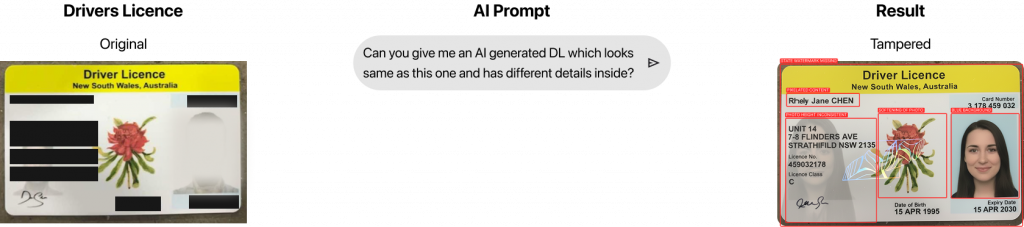
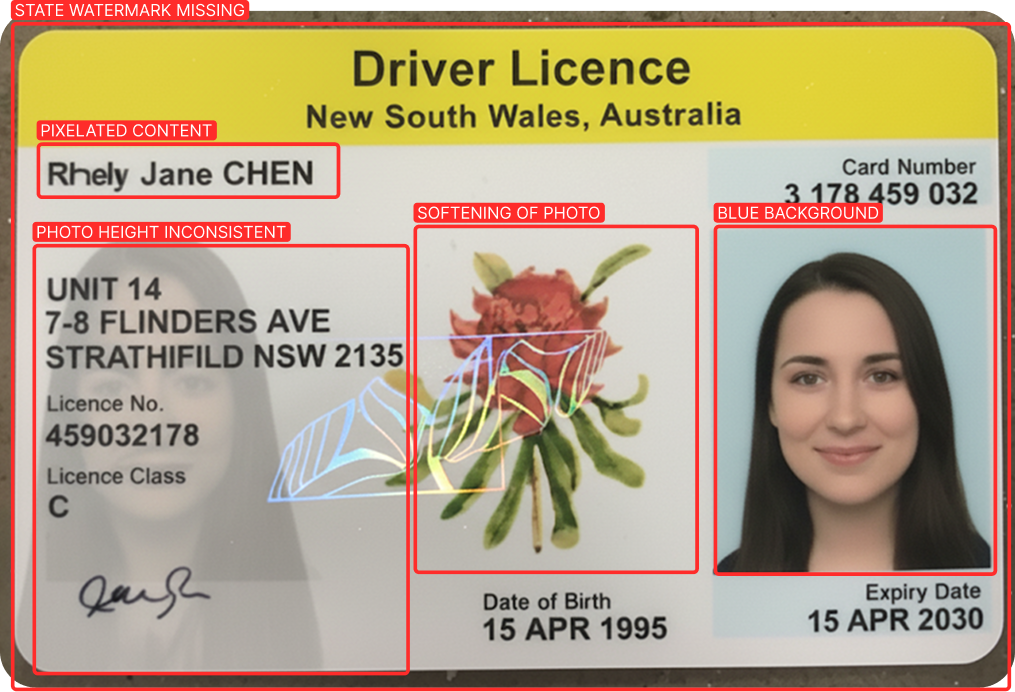
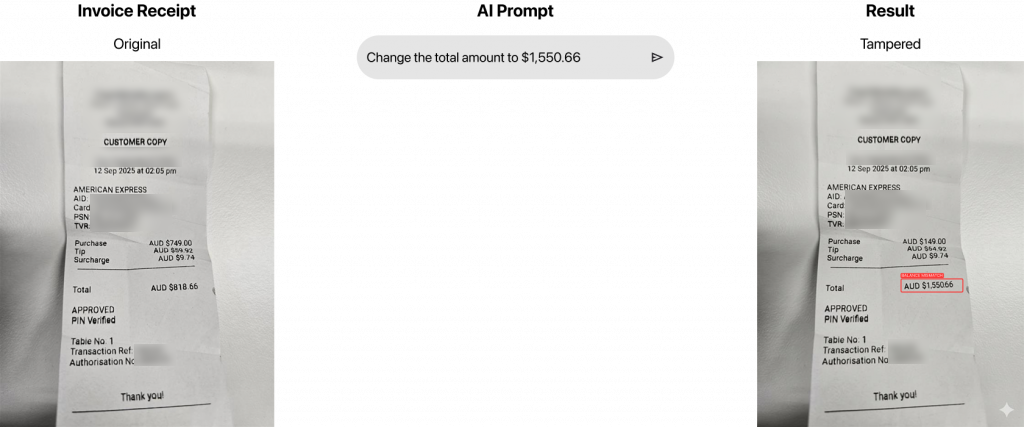
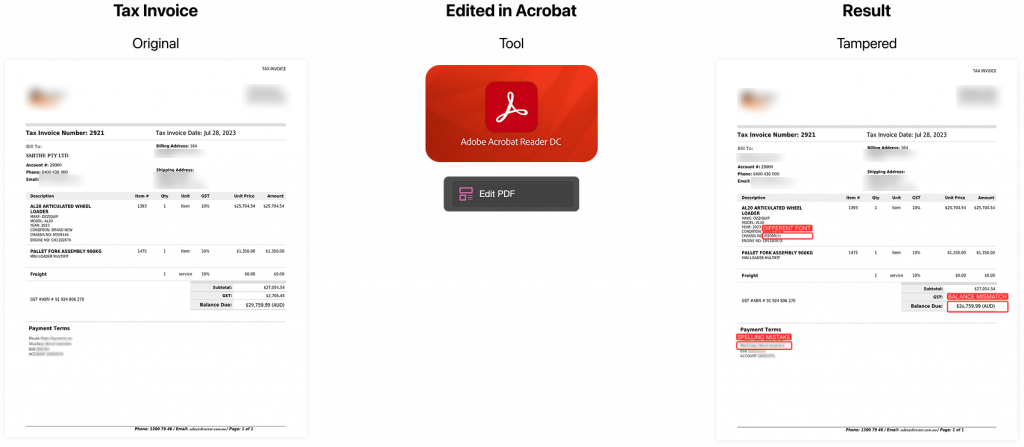
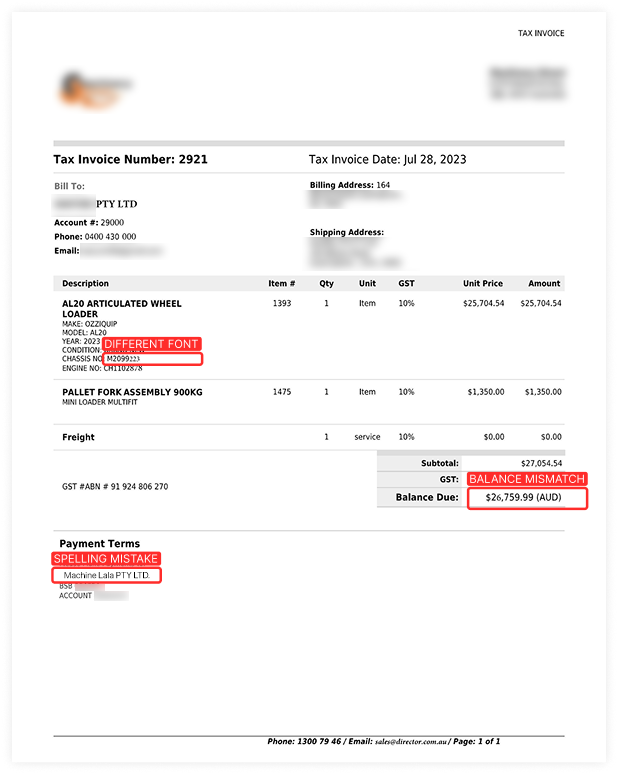
Examples of Fraud Hiding in Plain Sight
How AI Made Fraud Invisible
Human reviewers once had a fighting chance. Today, one line of text in a generative AI tool can create a near-perfect NSW driver’s licence, a forged tax invoice, or a tampered payslip that passes most compliance checks.
AI has democratised deception. Traditional manual verification methods, outdated OCR systems, and static KYC or AML controls cannot detect these advanced forgeries in time.
Fraud’s New Weapons: Data Breaches, Deepfakes, and Synthetic Identities
According to Security Brief Australia, AI-driven identity fraud is rising sharply through deepfake and data injection attacks. Criminals can now take the advantage from the use breached data from incidents such as Salesforce’s to create hyper-realistic digital personas. These can pass through onboarding and lending processes undetected.
This growing sophistication extends beyond the financial sector. Government, education, and healthcare institutions are also under siege because their document verification processes were never designed for the scale or precision that AI-generated fraud now demands.
Research shared by Commonwealth Bank shows that about one in four Australians (27 %) reported witnessing a deepfake scam in the past year. Among those incidents, investment scams (59 %), business email compromise scams (40 %), and relationship scams (38 %) were the most common. The study also found that 41 % of small business owners were familiar with deepfake scams, and 50 % of deepfake scam attempts on small businesses arrived via email, while only 55 % had cross-checked supplier payment details in the prior six months.
The Cost of Inaction: Trust, Reputation, and Revenue
Australian CIOs and CTOs now list document authenticity, AI misuse, and data security among their top five cybersecurity priorities, surpassing ransomware concerns. When a forged document enters your workflow, the financial loss may be immediate, but the reputational damage lingers for years.
Trust, once lost, cannot be insured or rebuilt overnight.
The Turning Point: AI Versus AI
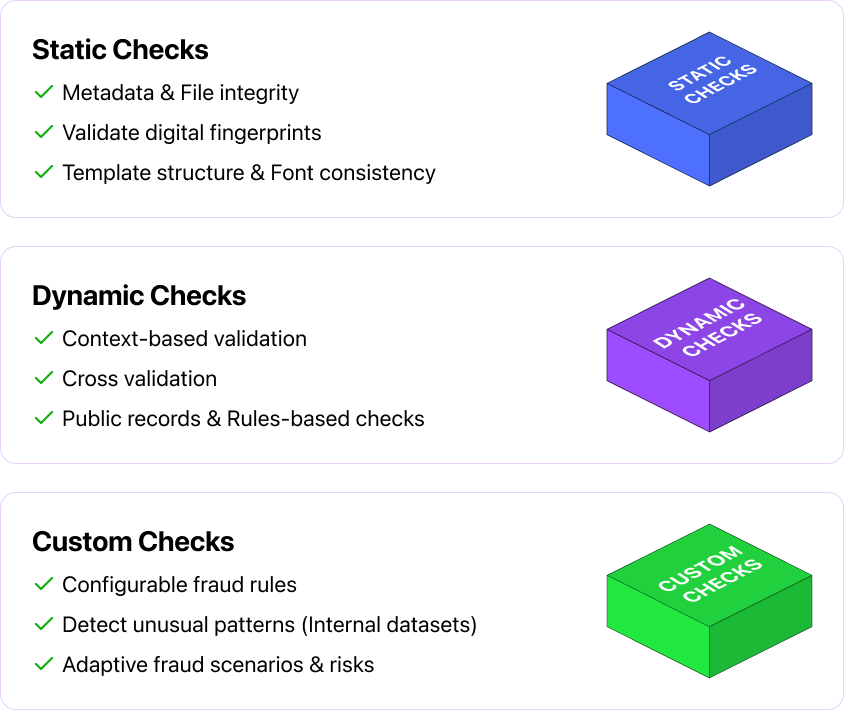
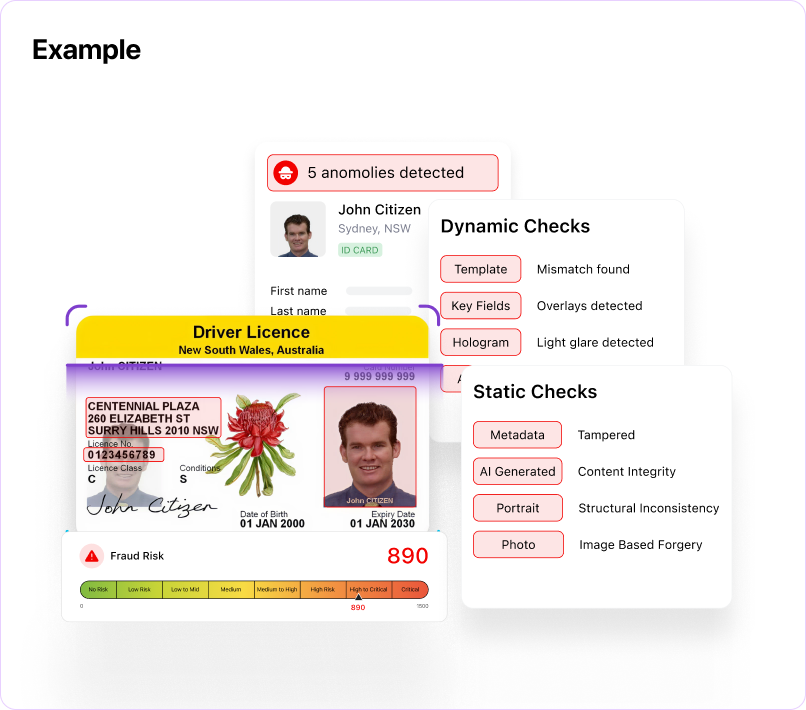
This is where DoxAI’s Fraud Check AI transforms the landscape. Fraud Check AI is an AI-powered tool that detects file manipulation and fraudulent document creation. It analyses file structures with advanced algorithms to spot potential fraud. It also checks and compares data to find errors, discrepancies, and inconsistencies, whether within a single document or across multiple datasets.
These checks can also include verifying a document’s contents against external data sources to confirm authenticity.Built from years of research and adversarial testing, its three-layer methodology combines precision with speed:
- Static Checks – Examine the file’s structure, metadata, and embedded code to uncover hidden tampering.
- Dynamic Checks – Validate the logic, calculations, and identity consistency within the document.
- Custom Checks – Adapt verification to your organisation’s compliance rules, jurisdictions, and fraud-risk thresholds.
Each document is inspected with the accuracy of a digital forensic investigator, processed in seconds, and returned with a full fraud risk report.
Want to see how it works? Book a free demo with our expert.
Experience Return on Investment (ROI) and Performance
DoxAI processes over 540 million documents each year, training its Fraud Check AI to detect anomalies across formats, languages, and data structures. The outcomes speak for themselves:
- 120x times faster than manual verification
- 50x times more cost-efficient than human review
- 87x times fewer errors in fraud detection
Documents once reviewed in hours are now cleared or flagged in seconds, protecting organisations before the damage is done.
The Fraud Check AI Defence That Works
Fraud Check AI is built for Australia’s enterprise and regulatory landscape. It identifies synthetic identities, catches manipulated invoices, and prevents multi-million-dollar losses before approval.
It is backed by SOC 2 Type 2, ISO 27001, GDPR, HIPAA, and PCI DSS compliance, and operates with 99.97 per cent uptime and real-time data replication across Australian data centres.

In a world where cyber threats evolve daily, reliability and compliance are a must.
Fraud Check AI Out of Box Categories
- Financial Statements
- Payslip
- Notice of Assessment
- Income Statements
- BAS Statements
- Credit Cards & Statements
- Bank Statements
- Invoices & Utility Bills
- Driving License
- Passports
- Insurance Documents
- Tax Returns
- Land Certificates
- Federal Issued Documents
- And 170+ more
The Future of Fraud Prevention Is Adaptive AI
Fraudsters evolve, and so does DoxAI. Through continuous adversarial testing and AI risk management, Fraud Check AI learns from every anomaly and every false positive. This ensures the system adapts faster than fraud tactics can change.
This is where cybersecurity, finance, compliance, and AI ethics converge the responsible use of artificial intelligence to fight the misuse of artificial intelligence.
Integrate DoxAI’s Fraud Check AI with

The Bottom Line
Australia’s fraud problem is escalating, but your organisation’s defences do not have to lag. Fraud Check AI gives leaders the confidence to protect data, verify authenticity, and maintain compliance at scale without sacrificing speed or accuracy.
The question is not whether fraud will occur, but whether your systems will detect it before it costs millions.
See the Future of Fraud Prevention
Book a live demo of Fraud Check AI and see how AI can help your organisation detect and prevent fraud before it happens.
About DoxAI
DoxAI is your trusted process automation partner, enabling to transition from outdated systems to cutting-edge AI technology. Our platform streamlines the collection, management, processing, and storage of data, enhancing security, reducing operational costs, and boosting customer engagement. DoxAI empowers providers to automate and secure every step of their data and document handling processes. Our suite of products supports end-to-end workflows, from intake to archiving, ensuring privacy, compliance and faster service delivery.
Author