
AUSTRAC Escalates Mortgage Fraud Crackdown as AI Driven Document Manipulation Forces Industry Reset

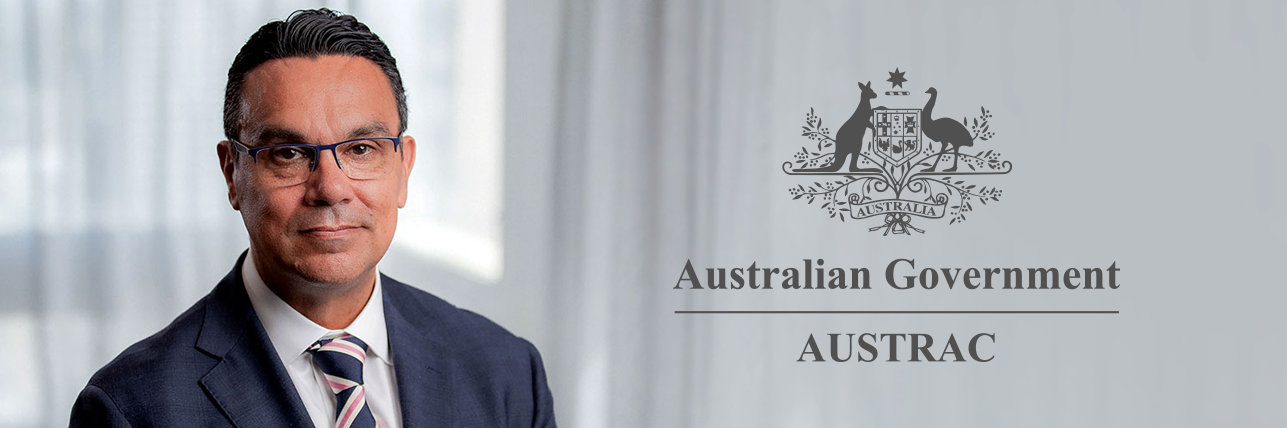
On 9 April 2026, AUSTRAC issued fresh guidance urging lenders to strengthen verification controls as its investigation into large scale mortgage fraud continues to expand across the Australian banking sector (The Adviser, 2026).
This follows earlier revelations involving Commonwealth Bank of Australia and the broader Big Four, where suspected fraudulent home loans reached up to $1 billion and $300 million respectively across multiple institutions. Consequently, the issue has evolved from isolated cases into a systemic, cross-bank risk.
AUSTRAC has confirmed it is now working with major banks, regulators and law enforcement agencies to map the scale, structure and coordination of these fraud networks. What began as isolated investigations has now evolved into a systemic risk assessment across the entire mortgage ecosystem.
This is no longer a question of isolated fraud events. It is a structural failure of verification frameworks in an AI enabled threat environment.
AUSTRAC’s Warning Signals a Shift From Compliance to Systemic Risk
AUSTRAC CEO Brendan Thomas made the regulatory position clear. Stronger verification must be embedded across every participant in the lending chain.
“When every professional involved in a transaction is required to know who they are dealing with and question the source of funds, it becomes significantly harder for false documents, synthetic identities or illicit money to move undetected” (The Adviser, 2026).
This statement reflects a fundamental shift in regulatory thinking. Fraud is no longer being treated as a downstream compliance issue. It is now being addressed as an upstream system design failure.
The implication is direct. Banks, brokers, accountants and associated professionals are all part of the control environment. Weakness at any point introduces systemic exposure.
Fintel Alliance and Cross Bank Data Sharing Reveal a New Intelligence Model
A central pillar of AUSTRAC’s response is the expansion of the Fintel Alliance, a public private intelligence partnership that includes major banks, federal agencies and regulatory bodies.
Through this initiative, lenders are now sharing mortgage data to identify patterns that individual institutions cannot detect in isolation.
This represents a significant evolution in fraud detection strategy. Historically, banks operated within siloed data environments. Fraud detection relied heavily on institution specific controls and retrospective analysis.
Now, intelligence is being aggregated at a national level.
AUSTRAC confirmed that at least 10 major lenders are contributing data to build a consolidated view of mortgage fraud risk (The Adviser, 2026).
This shift acknowledges a critical reality. Fraud networks do not operate within a single institution. Detection cannot remain institutionally isolated.
AI Driven Document Manipulation Is Now at the Core of Mortgage Fraud
Regulators and industry participants have identified a consistent pattern across suspected fraudulent loans.
These include:
- AI generated or heavily manipulated income documents
- Synthetic identities constructed using multiple data points
- Shell companies designed to simulate trading history
- Overseas deposits masking the origin of funds
- Professional facilitators coordinating application structures
According to reporting, artificial intelligence tools are now being used to generate highly realistic payslips, bank statements and identification documents that can pass traditional checks (The Adviser, 2026).
This fundamentally changes the fraud equation.
Traditional verification methods rely on visual inspection, static OCR extraction and checklist validation. These approaches assume that fraudulent documents will contain visible inconsistencies.
In 2026, that assumption is no longer valid.
AI generated documents are internally consistent, visually accurate and structurally engineered to bypass surface level controls.
Regulatory Focus Expands to AML Gaps and Gatekeeper Professions
AUSTRAC has explicitly linked the mortgage fraud investigation to broader weaknesses in Australia’s anti money laundering and counter terrorism financing framework.
The regulator is now examining how gatekeeper professions such as accountants, lawyers and real estate agents contribute to the preparation and submission of loan applications.
“This issue underscores why Australia is strengthening its AML/CTF framework to close long standing gaps that criminals have been able to exploit” (The Adviser, 2026).
This signals an expansion of accountability beyond banks.
Verification is no longer confined to lenders. It extends to every entity involved in the creation, validation and submission of financial documents.
ASIC Investigation Confirms Conduct and Governance Risks
Alongside AUSTRAC, Australian Securities and Investments Commission has initiated compliance inquiries into the suspected fraud.
Commissioner Kate O’Rourke confirmed that ASIC is examining conduct related to the use of falsified or AI generated documents in lending processes (The Adviser, 2026).
This introduces an additional layer of risk.
The issue is no longer limited to fraud detection. It extends to governance, accountability and compliance with financial services law.
Where failures are identified, enforcement action is likely to follow.
Industry Push for Consumer Data Right Expansion Reflects Structural Weakness
In response to the escalating risk, major industry bodies including the Australian Banking Association have called for the expansion of the Consumer Data Right.
The proposal seeks to enable secure, consent based access to:
- Australian Taxation Office income data
- ASIC registry records
- Verified government data sources
The objective is clear. Replace document based verification with direct access to source of truth data.
This approach addresses one of the core vulnerabilities exposed by the fraud investigations. Banks currently rely heavily on documents supplied by applicants.
In an environment where documents can be generated or manipulated using AI, that model is inherently flawed.
Why Document Based Verification Is Failing at Scale
The AUSTRAC guidance and industry response highlight a critical structural issue.
Document based verification assumes authenticity. It does not validate how a document was created.
Fraud networks exploit this gap by producing documents that:
- Appear legitimate on visual inspection
- Align with expected financial patterns
- Pass OCR based extraction systems
- Maintain internal consistency
However, these documents often contain hidden indicators of manipulation at the metadata and structural level.
Manual review cannot detect these signals.
Static systems cannot interpret them.
This is where traditional controls break down.
Embedding Forensic AI to Close the Verification Gap
To address this, institutions must shift from document validation to document forensics.
Fraud Check AI, developed by DoxAI, is designed specifically for this environment.
It operates across three integrated layers:
Static Analysis
Examines metadata, file structure, encoding signatures and embedded artefacts to detect whether a document has been generated or altered.
Dynamic Validation
Assesses internal logic including financial calculations, date sequences and cross document consistency.
Custom Risk Controls
Applies institution specific rules such as broker concentration, unusual deposit patterns and complex ownership structures.
This approach moves beyond what a document says. It evaluates how it was constructed and whether it could exist in its current form.
CEO Perspective: Fraud Is Now Engineered at Scale
Alfonso Porcelli, Chief Executive Officer of DoxAI, outlines the shift clearly.
“AUSTRAC’s escalation confirms that mortgage fraud is no longer opportunistic. It is engineered using artificial intelligence, coordinated across multiple parties and designed to bypass traditional verification systems.”
He continues.
“Financial institutions must assume that any digital document can be manipulated. The only effective response is to embed forensic AI directly into origination workflows to detect structural anomalies before approval.”
Measurable Outcomes in Fraud Prevention
Fraud Check AI processes hundreds of millions of documents annually across financial services and regulated industries.
In practice, it delivers three measurable outcomes:
- Up to 120 times faster document verification compared to manual analysis
- Up to 50 times greater cost efficiency through automation
- Up to 87 times fewer errors through layered forensic validation
These outcomes enable institutions to scale fraud detection without increasing operational burden.
From Investigation to Industry Reset
The AUSTRAC mortgage fraud crackdown represents more than regulatory activity. It marks a transition point for Australian banking.
Three conclusions are now unavoidable.
First, fraud is coordinated and technologically enabled.
Second, document based verification is no longer sufficient.
Third, detection must occur before approval, not after settlement.
Institutions that fail to adapt will face increasing regulatory scrutiny, operational disruption and reputational damage.
The Future of Mortgage Fraud Prevention in Australia
The expansion of AUSTRAC’s investigation confirms that fraud risk will continue to grow as AI tools become more accessible.
Banks must respond by embedding real time forensic analysis into every stage of the lending lifecycle.
This includes:
- Mortgage origination
- Broker and referral channels
- Business and trust lending
- Ongoing portfolio monitoring
Fraud prevention must operate at the same speed and scale as fraud creation.
Take Action Before the Next Escalation
If your organisation is reassessing lending controls in response to AUSTRAC’s guidance and ongoing investigations, the window to act is now.
Advanced AI driven fraud detection is no longer optional. It is a core requirement for maintaining regulatory compliance and protecting institutional integrity.
Let’s chat about how DoxAI’s Fraud Check AI can strengthen your verification framework before the next escalation occurs.
About DoxAI:
DoxAI is the automation partner for enterprises ready to become AI-native. We replace outdated systems and fragmented workflows with one intelligent automation layer unifying the collection, management, processing, and storage of data and documents to deliver stronger security, lower costs, and better customer experiences at scale.
DoxAI combines AI Governance, 70+ automation solutions, 90+ AI agents, Alfy AI and proprietary AI models. Its architecture also supports integration, consulting and sovereign AI deployment.
The platform supports financial services, government, healthcare, insurance, legal and other regulated industries. DoxAI can integrate with existing enterprise systems through APIs and configurable workflows.
References
The Adviser (2026) AUSTRAC urges tougher checks as mortgage fraud probe widens. Available at: https://www.theadviser.com.au/compliance/ (Accessed: 9 April 2026).
Author